
Headcount Planning Is a Finance Question, Not Only an HR One

Payroll is the largest cost line in most of the companies I work with. And yet headcount planning usually lives in a spreadsheet that HR owns and finance sees once a month.
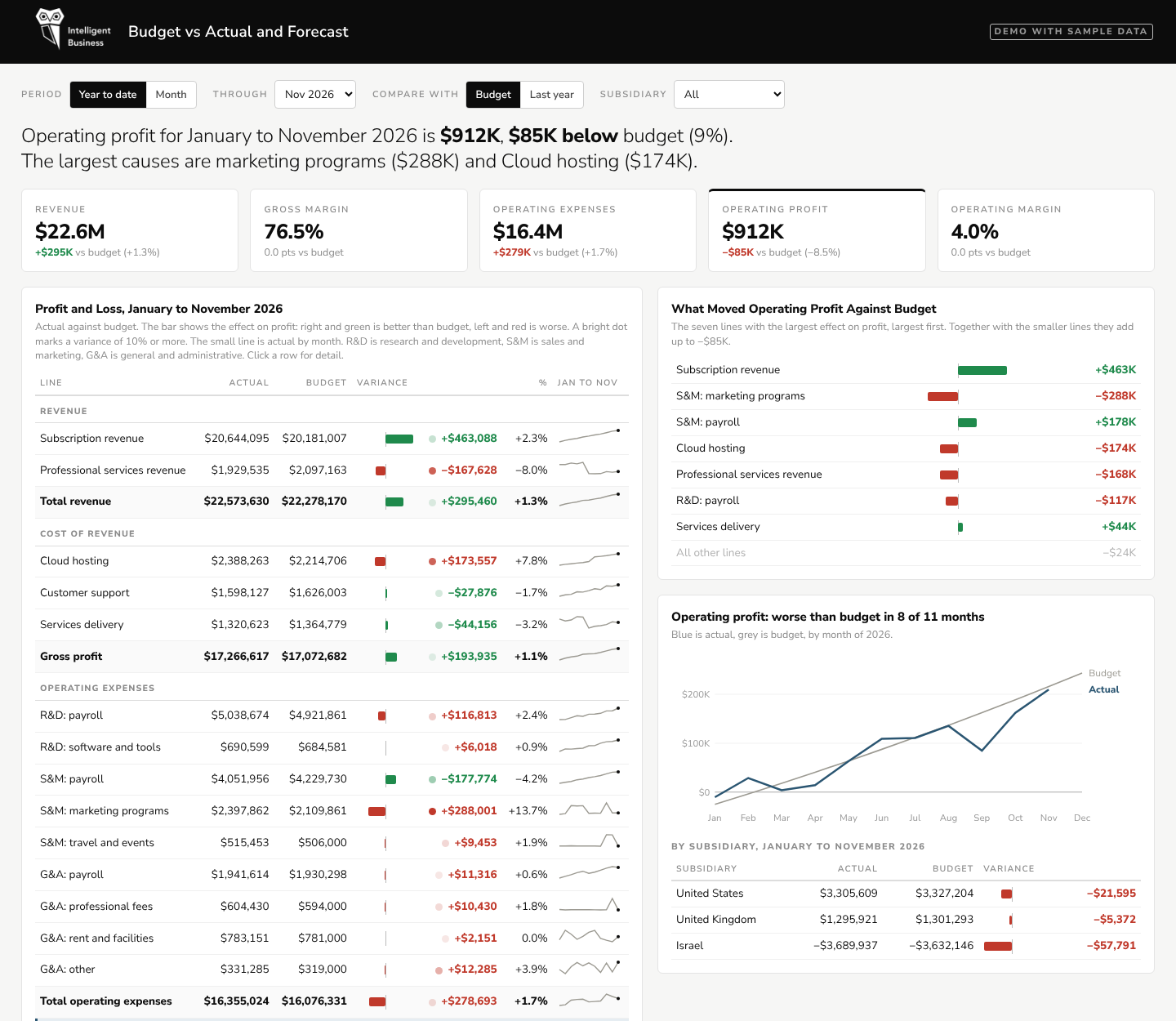
So when payroll comes in under budget, the CFO is pleased for about a minute. Then the question comes: is this a saving, or are we simply late in hiring?

Under Budget Is Not Always Good News
A position that was planned for June and is still open in November is not a saving. It is work that is not being done, and a cost that will arrive later.
To see that, finance needs three things in one place:
Headcount against plan, by department
Every open position, how long it has been open, and its status
What each position costs, and from which month
What We Built
A planning page that shows all three, and lets the people who know update it. The recruiter changes a status. The manager moves a start date. Finance sees the effect on this year's payroll immediately, without asking anyone.
A new position can be added in the same place, with its cost and start month, and the forecast updates.
One Version for HR and Finance
The point is not the chart. The point is that HR and finance look at the same list. When a start date moves, both know, and the budget conversation is about decisions, not about whose file is right.
How It Connects
Employees come from the HR system, the plan comes from the budget, and position changes are stored so the forecast always reflects the latest information.
The demo is live and runs on sample data. If you would like to try it, write to us at demos@ibusinessbi.com and we will open it for you.
Final Thought
Hiring plans change every week. The forecast should change with them.
Comments